
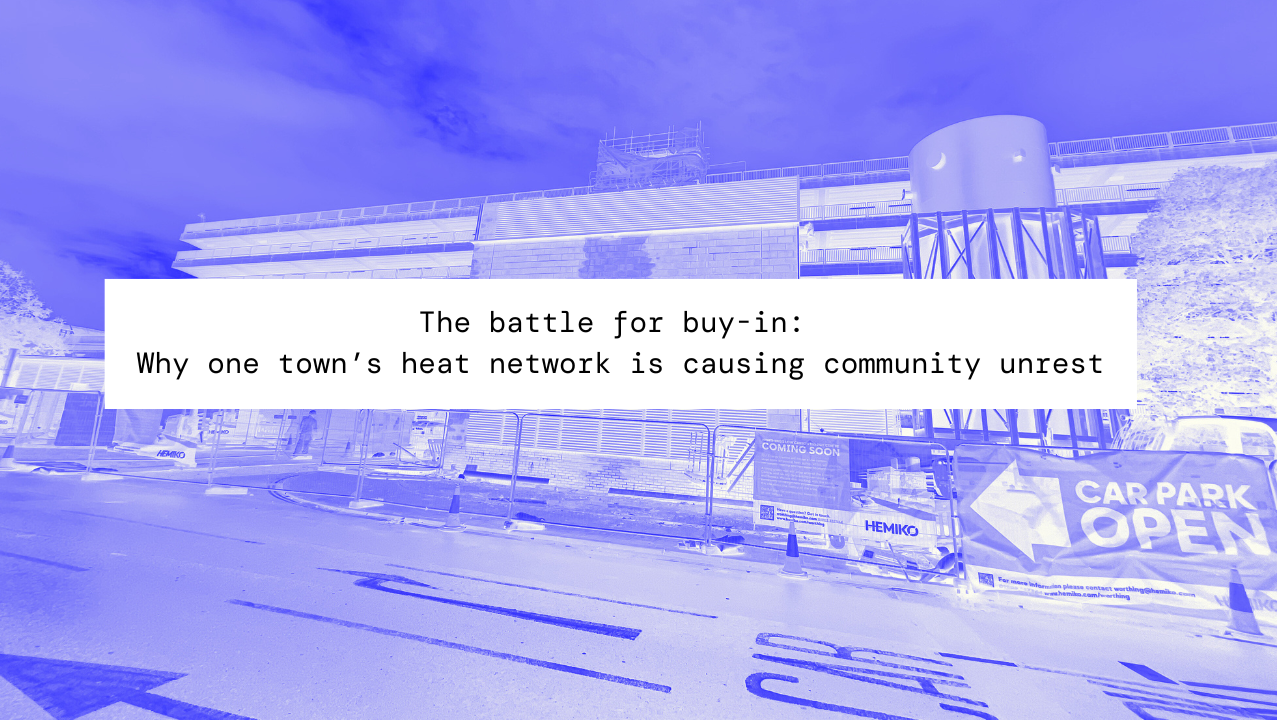
Our local town is getting one of the first heat networks in the UK – and the community hates it.
Built by Hemiko, the heat network will funnel waste heat between civic buildings – taking low carbon heat from the hospital to warm the museum, for example – and is intended to eventually expand to residential buildings in the town. The UK government is committing millions to expanding heat networks as part of Net Zero targets. It isn’t a new idea: district heating is the norm in many Scandinavian countries, with 98% of Copenhagen heated in this way.
The Local Benefits of the Heat Network
🌱 Carbon savings: Phase 1 is expected to save around 3,000 tonnes of CO₂ each year – equivalent to taking 2,000 cars off the road.
🌱 Local investment: Over £2.3 million has already been spent with local suppliers, creating green jobs.
🌱 Energy security: Less reliance on fossil fuels means more stable, homegrown energy for the town.
“We’re really jealous,” said someone I spoke to from a neighbouring town.
So Why the Backlash?
For months, roadworks have disrupted traffic, bus routes and footfall. Local businesses report declining sales and customers vent online about confusing diversions. But the anger goes beyond inconvenience.
Critics decry the heat network’s developer as Net Zero warriors, riding roughshod over the town at the expense of local businesses, some of which are shutting down because of reduced footfall that they say is caused by the roadworks. Local Facebook groups are on fire as locals exchange theories about whose pockets the money is flowing into, why the local council approved a scheme they say is untested, and whether the whole Net Zero idea is a scam.
When communication breaks down, misinformation fills the gap.
The Communication Gap in Climate Projects
Communication and community engagement from the heat network developers has definitely improved: in the last couple of months there have been drop-in sessions to get further info, free parking to encourage shoppers, local school art competitions and a community grant scheme to support local charities.
But is it enough to turn the tide?
Getting community buy-in for decarbonisation projects is absolutely essential. These long-term infrastructure projects often involve day-to-day disruption, which is all the ordinary citizen sees because of the psychological distance between immediate, all-too-tangible hassle versus abstract benefits that won’t kick in for some time. Ordinary people need to understand the benefits if they’re to get on board. As political headwinds drift right, the environmental message is not enough. It’s social impact that people see when they go into town, take their kids to school and look for a job.
How to Build Public Support for Decarbonisation Projects
📣Establishing a narrative early, communicating specific benefits for local people, countering objections and misinformation before a single shovel hits the ground.
📣Appealing to social norms by showing that other people and towns have already accepted the idea, showing that there is nothing novel or risky about what’s being built; in this case, introducing the many heat network projects across Europe and the UK.
📣School engagement for older students visiting the site to understand the future of green skills.
📣Deep engagement and support for those local businesses experiencing the most disruption.
📣Providing sustainability “local champions” with the information they need to respond on social media to the negative comments.
📣A greater emphasis on the positive social impact of the heat network, centring job creation, local investment and future-proofing our local infrastructure.
Why This Matters
As the Net Zero transition accelerates, more UK towns will face similar tensions between long-term sustainability and short-term disruption. The difference between backlash and buy-in will come down to communication and trust.
At Brace For Impact, we help organisations communicate sustainability in ways that resonate with real people. Whether you’re launching a heat network, retrofitting buildings or cutting emissions across your supply chain, your message must connect to local priorities.
If you’d like to talk about how we can help your business communicate climate projects with clarity and impact, get in touch.